Buy likeboost.eu ?
We are moving the project
likeboost.eu .
Are you interested in purchasing the domain
likeboost.eu ?
domain@kv-gmbh.de · 0541-91531010
Buy likeboost.eu ?
How do you solve compound quantifiers?
Compound quantifiers can be solved by breaking them down into simpler quantifiers and then applying the appropriate rules. For example, if the compound quantifier is "for every x, there exists a y such that...", you can first consider the "for every x" part and then the "there exists a y" part separately. This allows you to apply the rules for universal and existential quantifiers to solve the compound quantifier step by step. By breaking down the compound quantifier into simpler parts and applying the rules systematically, you can effectively solve compound quantifiers. **
How do universal and existential quantifiers describe and negate statements?
Universal quantifiers, denoted by the symbol ∀, are used to make a statement about all elements in a set. For example, the statement "∀x P(x)" means that the predicate P(x) is true for all elements x in the set. To negate a universally quantified statement, we use the symbol ¬ before the quantifier, so the negation of "∀x P(x)" would be "¬∀x P(x)", which is equivalent to "∃x ¬P(x)". On the other hand, existential quantifiers, denoted by the symbol ∃, are used to make a statement about at least one element in a set. For example, the statement "∃x P(x)" means that there exists at least one element x in the set for which the predicate P(x) is true. To negate an existentially quantified statement, we use the symbol ¬ before the quantifier, so the negation of "∃x **


Similar search terms for Quantifiers
Top-Angebote
Products related to Quantifiers:
-
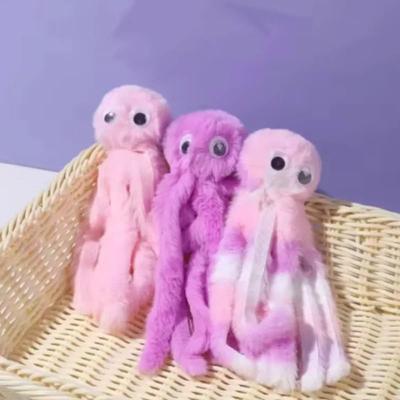
Uplifted Finds Octo Plush High Engagement Stimulator colorfulInject highintensity excitement into your pets day with the OctoPlush Stimulator, a multisensory toy engineered with tentacleflutter logic. Designed to mimic the erratic movement of aquatic prey, this 18 cm toy utilizes multistrand kinetic...33,97 $*Shipping: 0,00 $Secure redirect to the provider
-
Little Likes Kids Little Like Kids - Fubbles Bubblin Whale, Blue, Batteries Required, KidsRun, dance and play around with our cute oversized Fubbles® Bubblin Whale with continuous steams bubbles in the air! This is perfect for backyard, parks and parties.26,49 $*Shipping: 0,00 $Secure redirect to the provider
-
Uplifted Finds Orbit Flow 3 in 1 Kinetic Engagement Hub yellowMaximize your pets cognitive and physical stimulation with the OrbitFlow Kinetic Hub, a highperformance play center engineered with multitier engagement logic. This versatile system integrates three distinct predatory triggers into a single 21 cm...92,97 $*Shipping: 0,00 $Secure redirect to the provider
-
Uplifted Finds Octo Plush High Engagement Stimulator purpleInject highintensity excitement into your pets day with the OctoPlush Stimulator, a multisensory toy engineered with tentacleflutter logic. Designed to mimic the erratic movement of aquatic prey, this 18 cm toy utilizes multistrand kinetic...33,97 $*Shipping: 0,00 $Secure redirect to the provider




-
What are the rules for negating mathematical statements using quantifiers and sets?
When negating a mathematical statement with quantifiers and sets, the following rules apply: 1. To negate a statement with a universal quantifier (∀), change it to an existential quantifier (∃) and vice versa. 2. When negating a statement involving sets, use the complement of the set to negate the original statement. 3. When negating a statement involving a logical connective (such as AND, OR), apply De Morgan's laws to distribute the negation over the connectives. **
-
How do you describe and negate universal and existential quantifiers in statements?
Universal quantifiers, denoted by the symbol ∀, are used to make a statement about all elements in a set. For example, the statement "∀x, P(x)" means "For all x, P(x) is true." To negate a universal quantifier, we use the symbol ¬, so the negation of "∀x, P(x)" is "¬(∀x, P(x))," which can be rewritten as "∃x, ¬P(x)," meaning "There exists an x such that P(x) is false." Existential quantifiers, denoted by the symbol ∃, are used to make a statement about the existence of at least one element in a set. For example, the statement "∃x, P(x)" means "There exists an x such that P(x) is true." To negate an existential quantifier, we use the symbol ¬, so the negation of "∃x, P(x)" is **
-
How can I express the following statement using quantifiers or mathematical symbols?
The statement "All cats are mammals" can be expressed using quantifiers and mathematical symbols as ∀x (Cat(x) → Mammal(x)), where ∀x denotes "for all x", Cat(x) represents "x is a cat", Mammal(x) represents "x is a mammal", and the arrow → denotes "implies". This statement asserts that for every x, if x is a cat, then x is a mammal. **
-
What is social engagement?
Social engagement refers to the interaction and participation of individuals within a community or society. It involves actively connecting with others, contributing to the well-being of the community, and being involved in social activities and causes. Social engagement can take many forms, such as volunteering, participating in community events, and advocating for social issues. It is an important aspect of building strong and supportive communities and fostering a sense of belonging and connection among individuals. **

Internship or social engagement?
Choosing between an internship and social engagement depends on your goals and priorities. If you are looking to gain professional experience and build your resume, an internship may be the better option. However, if you are passionate about making a difference in your community and want to contribute to social causes, then social engagement could be more fulfilling. Ultimately, it's important to consider what will benefit you the most in the long run and align with your values and interests. **
Can social engagement be rewarded?
Yes, social engagement can be rewarded in various ways. For example, individuals can receive recognition and praise from their peers or community for their active participation and contributions. Additionally, some organizations or platforms may offer incentives or rewards for engaging in social activities, such as discounts, perks, or exclusive access to events. Ultimately, the act of engaging socially can lead to personal fulfillment, a sense of belonging, and the opportunity to build meaningful connections, which can be considered valuable rewards in themselves. **
Top-Angebote
Products related to Quantifiers:
-
Uplifted Finds Predatory Engagement Wrestling Puppet Hub Predatory Engagement Wrestling Puppet HubTransform interactive play with the PredatoryEngagement Puppet, a professionalgrade interaction module engineered with manualsimulation logic. This highutility tool features a reinforced plush architecture and poseable limbs, specifically designed...85,97 $*Shipping: 0,00 $Secure redirect to the provider
-
Costway 7 FT Inflatable Tube Man with Blower for Outdoor Business Promotion Store-BlackInject instant excitement into any event with this7 ft/215 cm attractive inflatable tube man featuring an iconic, energetic dance, with flowing hair, a cheerful smile, and waving arms, that captivates attention and lifts spirits.89,99 $*Shipping: 0,00 $Secure redirect to the provider
-
Uplifted Finds Octo Plush High Engagement Stimulator colorfulInject highintensity excitement into your pets day with the OctoPlush Stimulator, a multisensory toy engineered with tentacleflutter logic. Designed to mimic the erratic movement of aquatic prey, this 18 cm toy utilizes multistrand kinetic...33,97 $*Shipping: 0,00 $Secure redirect to the provider
-
Little Likes Kids Little Like Kids - Fubbles Bubblin Whale, Blue, Batteries Required, KidsRun, dance and play around with our cute oversized Fubbles® Bubblin Whale with continuous steams bubbles in the air! This is perfect for backyard, parks and parties.26,49 $*Shipping: 0,00 $Secure redirect to the provider
-
How do you solve compound quantifiers?
Compound quantifiers can be solved by breaking them down into simpler quantifiers and then applying the appropriate rules. For example, if the compound quantifier is "for every x, there exists a y such that...", you can first consider the "for every x" part and then the "there exists a y" part separately. This allows you to apply the rules for universal and existential quantifiers to solve the compound quantifier step by step. By breaking down the compound quantifier into simpler parts and applying the rules systematically, you can effectively solve compound quantifiers. **
-
How do universal and existential quantifiers describe and negate statements?
Universal quantifiers, denoted by the symbol ∀, are used to make a statement about all elements in a set. For example, the statement "∀x P(x)" means that the predicate P(x) is true for all elements x in the set. To negate a universally quantified statement, we use the symbol ¬ before the quantifier, so the negation of "∀x P(x)" would be "¬∀x P(x)", which is equivalent to "∃x ¬P(x)". On the other hand, existential quantifiers, denoted by the symbol ∃, are used to make a statement about at least one element in a set. For example, the statement "∃x P(x)" means that there exists at least one element x in the set for which the predicate P(x) is true. To negate an existentially quantified statement, we use the symbol ¬ before the quantifier, so the negation of "∃x **
-
What are the rules for negating mathematical statements using quantifiers and sets?
When negating a mathematical statement with quantifiers and sets, the following rules apply: 1. To negate a statement with a universal quantifier (∀), change it to an existential quantifier (∃) and vice versa. 2. When negating a statement involving sets, use the complement of the set to negate the original statement. 3. When negating a statement involving a logical connective (such as AND, OR), apply De Morgan's laws to distribute the negation over the connectives. **
-
How do you describe and negate universal and existential quantifiers in statements?
Universal quantifiers, denoted by the symbol ∀, are used to make a statement about all elements in a set. For example, the statement "∀x, P(x)" means "For all x, P(x) is true." To negate a universal quantifier, we use the symbol ¬, so the negation of "∀x, P(x)" is "¬(∀x, P(x))," which can be rewritten as "∃x, ¬P(x)," meaning "There exists an x such that P(x) is false." Existential quantifiers, denoted by the symbol ∃, are used to make a statement about the existence of at least one element in a set. For example, the statement "∃x, P(x)" means "There exists an x such that P(x) is true." To negate an existential quantifier, we use the symbol ¬, so the negation of "∃x, P(x)" is **
Similar search terms for Quantifiers
-
Uplifted Finds Orbit Flow 3 in 1 Kinetic Engagement Hub yellowMaximize your pets cognitive and physical stimulation with the OrbitFlow Kinetic Hub, a highperformance play center engineered with multitier engagement logic. This versatile system integrates three distinct predatory triggers into a single 21 cm...92,97 $*Shipping: 0,00 $Secure redirect to the provider
-
Uplifted Finds Octo Plush High Engagement Stimulator purpleInject highintensity excitement into your pets day with the OctoPlush Stimulator, a multisensory toy engineered with tentacleflutter logic. Designed to mimic the erratic movement of aquatic prey, this 18 cm toy utilizes multistrand kinetic...33,97 $*Shipping: 0,00 $Secure redirect to the provider
-
Uplifted Finds Octo Plush High Engagement Stimulator pinkInject highintensity excitement into your pets day with the OctoPlush Stimulator, a multisensory toy engineered with tentacleflutter logic. Designed to mimic the erratic movement of aquatic prey, this 18 cm toy utilizes multistrand kinetic...33,97 $*Shipping: 0,00 $Secure redirect to the provider
-
Uplifted Finds Octo Plush High Engagement Stimulator 3 PcsInject highintensity excitement into your pets day with the OctoPlush Stimulator, a multisensory toy engineered with tentacleflutter logic. Designed to mimic the erratic movement of aquatic prey, this 18 cm toy utilizes multistrand kinetic...63,97 $*Shipping: 0,00 $Secure redirect to the provider
-
How can I express the following statement using quantifiers or mathematical symbols?
The statement "All cats are mammals" can be expressed using quantifiers and mathematical symbols as ∀x (Cat(x) → Mammal(x)), where ∀x denotes "for all x", Cat(x) represents "x is a cat", Mammal(x) represents "x is a mammal", and the arrow → denotes "implies". This statement asserts that for every x, if x is a cat, then x is a mammal. **
-
What is social engagement?
Social engagement refers to the interaction and participation of individuals within a community or society. It involves actively connecting with others, contributing to the well-being of the community, and being involved in social activities and causes. Social engagement can take many forms, such as volunteering, participating in community events, and advocating for social issues. It is an important aspect of building strong and supportive communities and fostering a sense of belonging and connection among individuals. **
-
Internship or social engagement?
Choosing between an internship and social engagement depends on your goals and priorities. If you are looking to gain professional experience and build your resume, an internship may be the better option. However, if you are passionate about making a difference in your community and want to contribute to social causes, then social engagement could be more fulfilling. Ultimately, it's important to consider what will benefit you the most in the long run and align with your values and interests. **
-
Can social engagement be rewarded?
Yes, social engagement can be rewarded in various ways. For example, individuals can receive recognition and praise from their peers or community for their active participation and contributions. Additionally, some organizations or platforms may offer incentives or rewards for engaging in social activities, such as discounts, perks, or exclusive access to events. Ultimately, the act of engaging socially can lead to personal fulfillment, a sense of belonging, and the opportunity to build meaningful connections, which can be considered valuable rewards in themselves. **
* All prices are inclusive of VAT and, if applicable, plus shipping costs. The offer information is based on the details provided by the respective shop and is updated through automated processes. Real-time updates do not occur, so deviations can occur in individual cases. ** Note: Parts of this content were created by AI.