Buy likeboost.eu ?
We are moving the project
likeboost.eu .
Are you interested in purchasing the domain
likeboost.eu ?
domain@kv-gmbh.de · 0541-91531010
Buy likeboost.eu ?
Why doesn't port forwarding work on TP-Link?
Port forwarding may not work on TP-Link routers due to several reasons. One common reason is that the router's firmware may not be updated to the latest version, which can cause issues with port forwarding. Additionally, incorrect configuration of the port forwarding settings or conflicts with other network settings can also prevent port forwarding from working properly on TP-Link routers. It is important to ensure that the router's settings are properly configured and that any firewall or security software is not blocking the forwarded ports. **
What is the problem with port forwarding on TP-Link?
The problem with port forwarding on TP-Link routers is that it can be complex and confusing for some users. The user interface for setting up port forwarding can be difficult to navigate, and there may be limited documentation or support available to help users troubleshoot any issues they encounter. Additionally, some users may find that the port forwarding settings do not work as expected, leading to frustration and difficulty in accessing their desired services or applications. Overall, the problem with port forwarding on TP-Link routers lies in the user experience and the potential for technical difficulties. **

Similar search terms for TP-LINK-LS1005G-5-Port-Gigabit
Top-Angebote
Products related to TP-LINK-LS1005G-5-Port-Gigabit:
-
TP-LINK TL-SG105S 5-Port Gigabit Unmanaged Desktop Switch, Metal CaseTP-Link TL-SG105S: a five-port 10/100/1000 Mbps unmanaged plug-and-play desktop switch in a steel case, desktop or wall-mountable, fanless, with shielded ports and power-saving features. No configuration required; it expands one wired uplink to four devices.19,49 £*Shipping: 0,00 £Secure redirect to the provider
-
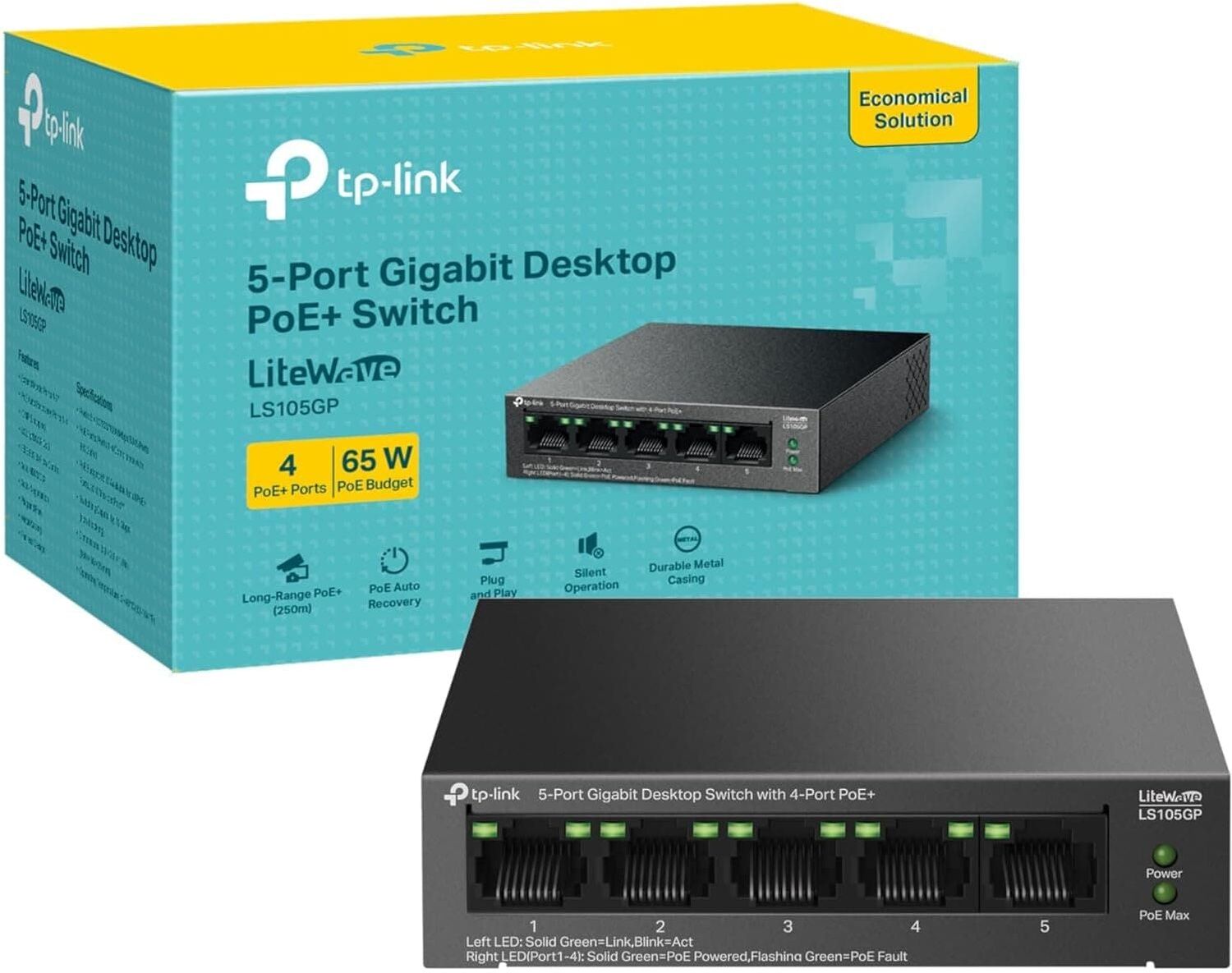
TP-LINK LS105GP 5-Port Gigabit Desktop Switch – 4-Port PoE+, 65W Power Budget, 250m Range, Metal Housing, NewOverview: The TP-Link LS105GP is a high-performance 5-port Gigabit desktop switch designed to meet the growing demands of modern networks. With 4 Power over Ethernet Plus (PoE+) ports and a total PoE powe The TP-Link LS105GP 5-Port Gigabit Desktop Switch is a high-performance networking solution designed for small businesses, offices, and surveillance setups. With 4 PoE+ (Power over Ethernet) ports , it can deliver both data and power over a single cable, supporting devices like IP cameras, access points, and VoIP phones effortlessly. Featuring a total power budget of 65W and 10Gbps switching capacity , the LS105GP ensures stable, fast, and efficient network performance. Its Extend Mode boosts PoE transmission up to 250 metres , making it ideal for long-distance IP camera deployments. Encased in a durable metal housing , this switch is built to perform reliably under demanding conditions. 5 Gigabit Ethernet ports (4 PoE+ + 1 Uplink) – ideal for high-speed data transfer and device connectivity. 65W PoE+ power budget – provides power and data to up to 4 PoE-enabled devices simultaneously. PoE+ (802.3af/at compliant) – automatically detects and powers compatible devices safely. 10Gbps switching capacity – ensures smooth, lag-free performance across all connected devices. Extend Mode (up to 250m) – increases PoE transmission range, perfect for IP cameras or distant access points. Priority Mode – prioritises important traffic to ensure stable video transmission for surveillance. Plug & Play setup – no configuration required; works instantly out of the box. Durable metal housing – enhances heat dissipation and long-term reliability. Fanless design – silent operation ideal for offices and homes. Energy-efficient technology – reduces power consumption automatically based on cable length and load. The TP-Link LS105GP combines speed, power, and reliability in a compact, easy-to-use design — making it perfect for powering and managing IP cameras, wireless APs, and office networking devices. Specification Details Model TP-Link LS105GP Ports 5 × Gigabit RJ45 Ports (4 × PoE+, 1 × Uplink) PoE Standard IEEE 802.3af / IEEE 802.3at PoE Power Budget 65W Total (Max 30W per Port) Switching39,98 £*Shipping: 0,00 £Secure redirect to the provider
-
TP-LINK Omada ER605 Gigabit Multi-WAN VPN RouterTP-Link Omada ER605 (SafeStream) Gigabit multi-WAN VPN router for small businesses, with Gigabit Ethernet WAN/LAN ports, load balancing across multiple WAN links, and site-to-site and client VPN support. Manageable through the Omada SDN platform.84,49 £*Shipping: 0,00 £Secure redirect to the provider
-
TP-LINK 8-Port Gigabit Ethernet Switch, Desktop/Wall-Mount, Steel Case(TL-SG108), NewPlug and play, no configuration required, manufacturer's limited lifetime warranty Sturdy metal case network switch, fanless quiet design, desktop or wall-mounting design 8 port Gigabit Ethernet Splitter - 8 10/100/1000 Mbps Gigabit auto-negotiation RJ45 ports ideally expand network capacity Traffic optimisation, support 802.1p/DSCP QoS and IGMP snooping function Green Ethernet technology saves the power up to 82 percent. Brand TP-Link Number of ports 8 Included components 1 x Power Adapter, 1 x Installation Guide, 1 x 8-Port 10/100/1000Mbps Desktop Switch TL-SG108 Compatible devices Desktop Switch type Network switch25,49 £*Shipping: 0,00 £Secure redirect to the provider



-
How can I set up port forwarding on a TP-Link router?
To set up port forwarding on a TP-Link router, you will need to access the router's web-based management interface. Open a web browser and enter the router's IP address in the address bar. Log in with your username and password. Once logged in, navigate to the "Forwarding" or "Virtual Servers" section in the router's settings. Here, you can add a new port forwarding rule by specifying the port number, protocol, and the local IP address of the device you want to forward the port to. Save the changes and the port forwarding rule will be set up on your TP-Link router. **
-
'Ubiquiti or TP-Link?'
Both Ubiquiti and TP-Link are reputable brands in the networking industry, but they cater to different market segments. Ubiquiti is known for its high-performance, enterprise-grade networking equipment, often used by businesses and professionals. TP-Link, on the other hand, offers a wide range of networking products suitable for home and small business use, with a focus on affordability and ease of use. The choice between the two brands depends on the specific needs and budget of the user. If you require advanced features and reliability, Ubiquiti may be the better choice, while TP-Link is a great option for those looking for cost-effective and user-friendly networking solutions. **
-
Why doesn't the TP-Link WLAN adapter support 5 GHz?
The TP-Link WLAN adapter may not support 5 GHz because it was designed to be a budget-friendly option for users who primarily need to connect to 2.4 GHz networks. Implementing 5 GHz support would likely increase the cost of the adapter, which may not align with the target market for this particular product. Additionally, some older devices or models may not have the hardware capabilities to support 5 GHz frequencies. **
-
How can I set up port forwarding for the TP-Link Spigot 1165?
To set up port forwarding for the TP-Link Spigot 1165, you will need to access the router's web interface. Once logged in, navigate to the port forwarding section, which may be located under the "Advanced" or "Security" settings. From there, you can add a new port forwarding rule by specifying the port number and the IP address of the device you want to forward the port to. Make sure to save the changes and restart the router for the new port forwarding rule to take effect. **

What is the LAN port on the TP-Link RE450 AC1750 used for?
The LAN port on the TP-Link RE450 AC1750 is used to connect the extender to a wired device, such as a computer, gaming console, or smart TV. This allows the wired device to access the extended Wi-Fi network and take advantage of the improved coverage and performance provided by the extender. The LAN port essentially acts as a bridge between the wired device and the extended Wi-Fi network, providing a reliable and stable connection. **
How can I switch the TP-Link extender to 5 GHz?
To switch the TP-Link extender to 5 GHz, you will need to access the extender's web interface. Connect your device to the extender's network and open a web browser. Enter the default IP address of the extender (usually 192.168.0.254) in the address bar and press Enter. Log in with the default username and password (usually admin/admin). Once logged in, navigate to the wireless settings and select the 5 GHz frequency band. Save the changes and the extender will switch to the 5 GHz network. **
Top-Angebote
Products related to TP-LINK-LS1005G-5-Port-Gigabit:
-
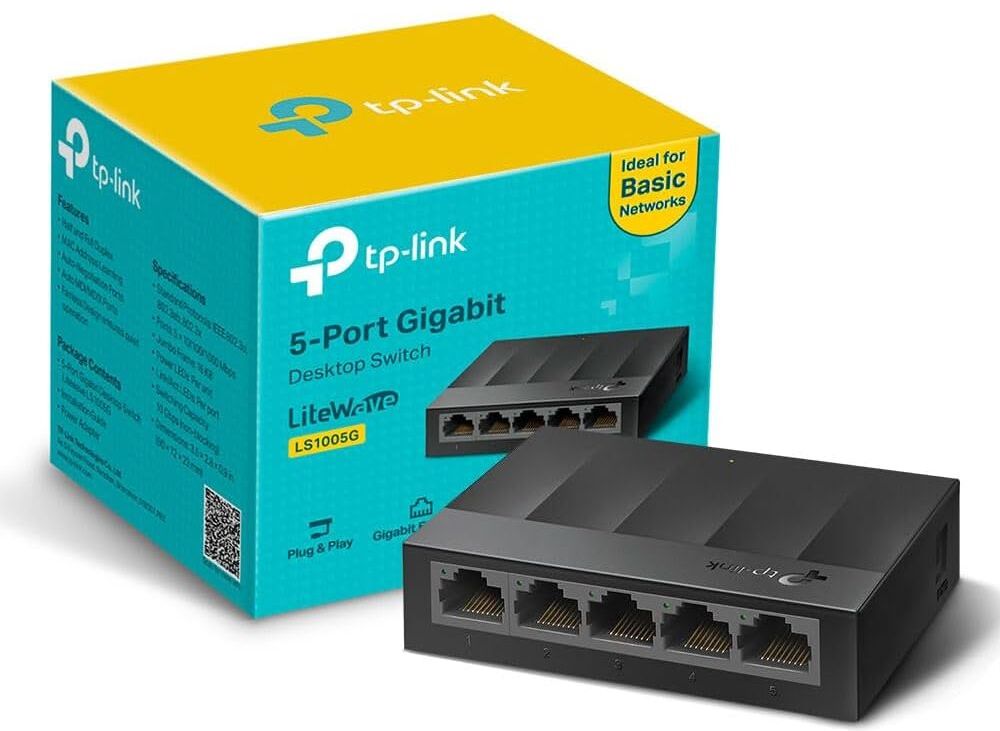
TP-LINK LS1005G 5-Port Gigabit Ethernet Switch – Desktop/Wall-Mount Network Hub, Plug & Play, Plastic CaseProduct Overview: The LS1005G 5-Port Gigabit Ethernet Switch is the perfect solution for expanding your home or office network. With five Gigabit Ethernet ports, this network splitter allows you to connect multiple devices for faster and more stable internet connectivity. Its plug-and-play functionality ensures quick and easy setup without the need for any software installation. The compact, durable plastic case allows for both desktop and wall-mount installation, making it a versatile option for any space. Key Features: 5 Gigabit Ethernet Ports : Provides five high-speed Gigabit Ethernet ports for fast and reliable wired connections to your devices. Plug and Play : Easy to use with no setup or installation required, simply plug in and start connecting devices immediately. Versatile Desktop/Wallmount Design : Can be placed on a desk or mounted on a wall for space-saving convenience and flexibility. Durable Plastic Case : Lightweight yet durable, the plastic casing ensures long-lasting use and protection for the internal components. Improved Network Performance : Ideal for enhancing the speed and stability of your home or office network, supporting multiple devices simultaneously. Energy-Efficient : Designed to operate efficiently with low power consumption, helping you save on energy costs. Product Description: The LS1005G 5-Port Desktop/Wallmount Gigabit Ethernet Switch is a reliable and efficient solution for expanding your wired network. With five Gigabit Ethernet ports, it ensures fast data transfer speeds for streaming, gaming, and browsing. Its plug-and-play feature makes installation quick and hassle-free, while the durable plastic case offers long-lasting protection for the device. Whether you're using it on a desktop or mounting it on a wall, the LS1005G provides flexibility and convenience. Enhance your network setup today with this compact yet powerful network splitter, ideal for connecting multiple devices in any home or office environment.9,99 £*Shipping: 0,00 £Secure redirect to the provider
-
TP-LINK TL-SG105S 5-Port Gigabit Unmanaged Desktop Switch, Metal CaseTP-Link TL-SG105S: a five-port 10/100/1000 Mbps unmanaged plug-and-play desktop switch in a steel case, desktop or wall-mountable, fanless, with shielded ports and power-saving features. No configuration required; it expands one wired uplink to four devices.19,49 £*Shipping: 0,00 £Secure redirect to the provider
-
TP-LINK LS105GP 5-Port Gigabit Desktop Switch – 4-Port PoE+, 65W Power Budget, 250m Range, Metal Housing, NewOverview: The TP-Link LS105GP is a high-performance 5-port Gigabit desktop switch designed to meet the growing demands of modern networks. With 4 Power over Ethernet Plus (PoE+) ports and a total PoE powe The TP-Link LS105GP 5-Port Gigabit Desktop Switch is a high-performance networking solution designed for small businesses, offices, and surveillance setups. With 4 PoE+ (Power over Ethernet) ports , it can deliver both data and power over a single cable, supporting devices like IP cameras, access points, and VoIP phones effortlessly. Featuring a total power budget of 65W and 10Gbps switching capacity , the LS105GP ensures stable, fast, and efficient network performance. Its Extend Mode boosts PoE transmission up to 250 metres , making it ideal for long-distance IP camera deployments. Encased in a durable metal housing , this switch is built to perform reliably under demanding conditions. 5 Gigabit Ethernet ports (4 PoE+ + 1 Uplink) – ideal for high-speed data transfer and device connectivity. 65W PoE+ power budget – provides power and data to up to 4 PoE-enabled devices simultaneously. PoE+ (802.3af/at compliant) – automatically detects and powers compatible devices safely. 10Gbps switching capacity – ensures smooth, lag-free performance across all connected devices. Extend Mode (up to 250m) – increases PoE transmission range, perfect for IP cameras or distant access points. Priority Mode – prioritises important traffic to ensure stable video transmission for surveillance. Plug & Play setup – no configuration required; works instantly out of the box. Durable metal housing – enhances heat dissipation and long-term reliability. Fanless design – silent operation ideal for offices and homes. Energy-efficient technology – reduces power consumption automatically based on cable length and load. The TP-Link LS105GP combines speed, power, and reliability in a compact, easy-to-use design — making it perfect for powering and managing IP cameras, wireless APs, and office networking devices. Specification Details Model TP-Link LS105GP Ports 5 × Gigabit RJ45 Ports (4 × PoE+, 1 × Uplink) PoE Standard IEEE 802.3af / IEEE 802.3at PoE Power Budget 65W Total (Max 30W per Port) Switching39,98 £*Shipping: 0,00 £Secure redirect to the provider
-
Why doesn't port forwarding work on TP-Link?
Port forwarding may not work on TP-Link routers due to several reasons. One common reason is that the router's firmware may not be updated to the latest version, which can cause issues with port forwarding. Additionally, incorrect configuration of the port forwarding settings or conflicts with other network settings can also prevent port forwarding from working properly on TP-Link routers. It is important to ensure that the router's settings are properly configured and that any firewall or security software is not blocking the forwarded ports. **
-
What is the problem with port forwarding on TP-Link?
The problem with port forwarding on TP-Link routers is that it can be complex and confusing for some users. The user interface for setting up port forwarding can be difficult to navigate, and there may be limited documentation or support available to help users troubleshoot any issues they encounter. Additionally, some users may find that the port forwarding settings do not work as expected, leading to frustration and difficulty in accessing their desired services or applications. Overall, the problem with port forwarding on TP-Link routers lies in the user experience and the potential for technical difficulties. **
-
How can I set up port forwarding on a TP-Link router?
To set up port forwarding on a TP-Link router, you will need to access the router's web-based management interface. Open a web browser and enter the router's IP address in the address bar. Log in with your username and password. Once logged in, navigate to the "Forwarding" or "Virtual Servers" section in the router's settings. Here, you can add a new port forwarding rule by specifying the port number, protocol, and the local IP address of the device you want to forward the port to. Save the changes and the port forwarding rule will be set up on your TP-Link router. **
-
'Ubiquiti or TP-Link?'
Both Ubiquiti and TP-Link are reputable brands in the networking industry, but they cater to different market segments. Ubiquiti is known for its high-performance, enterprise-grade networking equipment, often used by businesses and professionals. TP-Link, on the other hand, offers a wide range of networking products suitable for home and small business use, with a focus on affordability and ease of use. The choice between the two brands depends on the specific needs and budget of the user. If you require advanced features and reliability, Ubiquiti may be the better choice, while TP-Link is a great option for those looking for cost-effective and user-friendly networking solutions. **
Similar search terms for TP-LINK-LS1005G-5-Port-Gigabit
-
TP-LINK Omada ER605 Gigabit Multi-WAN VPN RouterTP-Link Omada ER605 (SafeStream) Gigabit multi-WAN VPN router for small businesses, with Gigabit Ethernet WAN/LAN ports, load balancing across multiple WAN links, and site-to-site and client VPN support. Manageable through the Omada SDN platform.84,49 £*Shipping: 0,00 £Secure redirect to the provider
-
TP-LINK 8-Port Gigabit Ethernet Switch, Desktop/Wall-Mount, Steel Case(TL-SG108), NewPlug and play, no configuration required, manufacturer's limited lifetime warranty Sturdy metal case network switch, fanless quiet design, desktop or wall-mounting design 8 port Gigabit Ethernet Splitter - 8 10/100/1000 Mbps Gigabit auto-negotiation RJ45 ports ideally expand network capacity Traffic optimisation, support 802.1p/DSCP QoS and IGMP snooping function Green Ethernet technology saves the power up to 82 percent. Brand TP-Link Number of ports 8 Included components 1 x Power Adapter, 1 x Installation Guide, 1 x 8-Port 10/100/1000Mbps Desktop Switch TL-SG108 Compatible devices Desktop Switch type Network switch25,49 £*Shipping: 0,00 £Secure redirect to the provider
-
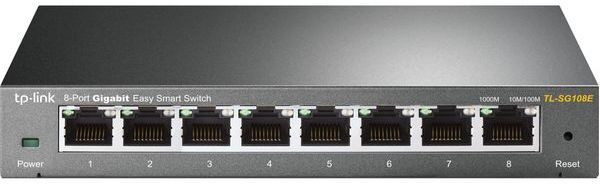
TP-LINK TL-SG108E 8-Port Gigabit Easy Smart Network Switch – Managed Desktop Ethernet SwitchOverview The TP-Link TL-SG108E 8-Port Gigabit Easy Smart Network Switch is a reliable and efficient networking solution designed for small offices, home networks, and workstations. Featuring 8 Gigabit Ethernet ports , this switch provides fast and stable wired connections for computers, printers, IP cameras, gaming consoles, and other network devices. With Easy Smart management features , including VLAN, QoS, and network monitoring, it allows users to optimise network performance while maintaining simple configuration. Built with a durable metal casing and plug-and-play functionality, the TL-SG108E offers dependable network expansion and high-speed connectivity. Key Features 8 Gigabit Ethernet Ports – High-speed wired connections for multiple network devices. Easy Smart Management – Supports VLAN, QoS, IGMP Snooping, and network monitoring features. Plug-and-Play Setup – Simple installation without complex configuration. Gigabit Speeds – Up to 1000Mbps for fast data transfer and network performance. Quality of Service (QoS) – Prioritise network traffic for smooth streaming and gaming. VLAN Support – Improved network segmentation and security. Durable Metal Housing – Robust build designed for long-term reliability. Energy Efficient Design – Automatically adjusts power consumption based on connection status. Fanless Operation – Silent performance suitable for office or home environments. Compact Desktop Design – Ideal for small networking setups. Benefits The TP-Link TL-SG108E is ideal for expanding wired networks while maintaining reliable and high-speed performance. With Gigabit connectivity , it supports smooth data transfer for bandwidth-intensive tasks such as video streaming, file sharing, and online gaming. The Easy Smart management features allow users to optimise network traffic and improve overall network efficiency. Functions such as VLAN segmentation and QoS prioritisation help ensure stable and secure connectivity across connected devices. Its compact, fanless design ensures quiet operation, making it suitable for home offices and workspaces where minimal noise is preferred. With durable metal construction and simple plug-and-play installation, the TL-SG108E provides dependable networking performance with minimal maintenance. Specifications Specification Details Brand TP-Link Model TL-SG108E EAN / Barcode [Ean] Type Easy Smart Gigabit Network Switch Ports 8 × Gigabit Ethernet Ports Switching Capacity 16 Gbps Forwarding Rate 11.9 Mpps Management Features VLAN, QoS, IGMP Snooping, Monitoring Connectivity Ethernet Mounting Desktop Housing Material Metal Cooling Fanless Power Supply External Power Adapter Dimensions Approx. 158 × 101 × 25 mm Weight Approx. 0.46 kg Package Contents TP-Link TL-SG108E Switch, Power Adapter, Installation Guide28,98 £*Shipping: 0,00 £Secure redirect to the provider
-
TP-LINK TL-SG108PE 8-Port Gigabit Easy Smart Network Switch with 4-Port PoE+ - Gun Metal GreyEight-port Gigabit network switch with four standard LAN ports and four Power over Ethernet (PoE) ports delivering up to 1000 Mbps data transfer speed. Web-based management interface for network monitoring. Compact design measuring 102 x 186 x 123 mm with lifetime warranty.76,49 £*Shipping: 0,00 £Secure redirect to the provider
-
Why doesn't the TP-Link WLAN adapter support 5 GHz?
The TP-Link WLAN adapter may not support 5 GHz because it was designed to be a budget-friendly option for users who primarily need to connect to 2.4 GHz networks. Implementing 5 GHz support would likely increase the cost of the adapter, which may not align with the target market for this particular product. Additionally, some older devices or models may not have the hardware capabilities to support 5 GHz frequencies. **
-
How can I set up port forwarding for the TP-Link Spigot 1165?
To set up port forwarding for the TP-Link Spigot 1165, you will need to access the router's web interface. Once logged in, navigate to the port forwarding section, which may be located under the "Advanced" or "Security" settings. From there, you can add a new port forwarding rule by specifying the port number and the IP address of the device you want to forward the port to. Make sure to save the changes and restart the router for the new port forwarding rule to take effect. **
-
What is the LAN port on the TP-Link RE450 AC1750 used for?
The LAN port on the TP-Link RE450 AC1750 is used to connect the extender to a wired device, such as a computer, gaming console, or smart TV. This allows the wired device to access the extended Wi-Fi network and take advantage of the improved coverage and performance provided by the extender. The LAN port essentially acts as a bridge between the wired device and the extended Wi-Fi network, providing a reliable and stable connection. **
-
How can I switch the TP-Link extender to 5 GHz?
To switch the TP-Link extender to 5 GHz, you will need to access the extender's web interface. Connect your device to the extender's network and open a web browser. Enter the default IP address of the extender (usually 192.168.0.254) in the address bar and press Enter. Log in with the default username and password (usually admin/admin). Once logged in, navigate to the wireless settings and select the 5 GHz frequency band. Save the changes and the extender will switch to the 5 GHz network. **
* All prices are inclusive of VAT and, if applicable, plus shipping costs. The offer information is based on the details provided by the respective shop and is updated through automated processes. Real-time updates do not occur, so deviations can occur in individual cases. ** Note: Parts of this content were created by AI.